
The Bosch 4100 is a popular choice for hobbyists and professionals alike, and its comprehensive owners manual, available since 2012, details safe operation and maintenance.
ManualsLib and the Internet Archive offer downloadable versions, with revisions occurring as recently as May 26, 2021, ensuring users have access to the latest guidance.
Overview of the 4100 Model
The Bosch 4100 table saw, as detailed in its operating and safety instructions manual, is recognized for its blend of power and portability. Released initially in 2012, the model continues to be supported with updated manuals accessible through resources like ManualsLib and the Internet Archive.
This saw is designed for a variety of woodworking tasks, catering to both DIY enthusiasts and professionals. The owners manual emphasizes proper setup, operation, and crucially, safety precautions. It’s a benchtop model, offering a balance between workspace efficiency and convenient storage. The manual’s 124 pages cover everything from assembly to troubleshooting.
Notably, the manual stresses the importance of using compatible blades, specifically those within the .092″ to .088″ thickness range.
Key Features and Specifications

The Bosch 4100 table saw, as outlined in its owners manual, boasts several key features. A prominent one is the integrated dust port, compatible with a standard 2-1/4 inch vacuum hose, facilitating efficient sawdust removal. The manual details this connection for optimal workspace cleanliness.
Specifications highlighted include blade thickness compatibility – crucial for safe operation – accepting blades between .092″ and .088″. The manual explicitly warns against using extra-thin kerf blades (under .092″) or blades with overly thick bodies (over .088″).
Furthermore, the manual stresses avoiding blade dampeners or stabilizers, as these can interfere with the riving knife’s function.

Safety Precautions
The Bosch 4100 owners manual prioritizes user safety, emphasizing the avoidance of improper blade types and accessories like dampeners to prevent injury.
General Safety Rules
The Bosch 4100 table saw’s operating manual strongly emphasizes fundamental safety practices. Users must read and understand all instructions before operation, focusing on potential hazards. Always wear appropriate eye and hearing protection, and never remove safety guards. Maintain a clean and well-lit workspace, free from distractions.
Disconnect the power cord before making adjustments or changing blades. Avoid loose clothing or jewelry that could become entangled. Never reach around a spinning blade. Be aware of kickback risks and maintain a firm grip on the workpiece. Prioritize a safe working environment at all times, following all guidelines.
Specific Safety Instructions for the Bosch 4100
The Bosch 4100 manual specifically cautions against using incorrect blade types. Avoid extra-thin kerf blades (less than .092″) or those with a thick body plate (greater than .088″). Do not employ blade dampeners, stabilizers, or stiffening collars on both sides of the blade, as these interfere with proper riving knife alignment.
Ensure the riving knife is always in place and correctly adjusted. Regularly inspect the guard system for functionality. Understand the potential for kickback and utilize appropriate push sticks or featherboards. Adhering to these specific instructions minimizes risk and ensures safe operation of the 4100 model.

Setting Up the Table Saw
The Bosch 4100 requires careful unboxing and assembly, detailed in the owners manual. It also features a convenient 2-1/4″ vacuum port for dust collection.
Unboxing and Assembly
Careful unboxing is the first step, as outlined in the Bosch 4100 owners manual. Inspect all components for damage during shipping; The manual provides detailed diagrams and step-by-step instructions for assembling the table saw, including attaching the legs, mounting the blade guard, and installing the riving knife.
Pay close attention to proper alignment during assembly, as this impacts performance and safety. The manual emphasizes ensuring all bolts are tightened securely. Downloadable versions from ManualsLib and the Internet Archive offer visual aids to assist with this process, making setup straightforward for both novice and experienced users.
Connecting to Power and Dust Collection
The Bosch 4100 owners manual stresses the importance of proper electrical connection. Ensure the power supply matches the saw’s requirements before plugging it in. The manual details safe grounding procedures to prevent electrical shock.
Notably, the 4100 features a vacuum hook-up, allowing connection of a 2-1/4 inch hose for efficient dust removal. The manual illustrates the dust port location and provides guidance on maximizing dust collection effectiveness. Resources on ManualsLib highlight this feature, emphasizing a cleaner and healthier work environment during operation.

Operating Instructions
The Bosch 4100’s manual provides detailed instructions for powering the saw on and off, and executing fundamental cuts like ripping, crosscutting, and mitering safely.
Powering On and Off
The Bosch 4100 owner’s manual emphasizes a deliberate approach to powering the table saw. Before switching on, always verify the blade is unobstructed and the riving knife is correctly positioned for optimal safety.
To start, firmly press the large on/off paddle switch; releasing it immediately stops the blade. Never attempt to force the switch or bypass its safety features. The manual cautions against leaving the saw unattended while running.
When finished, ensure the blade comes to a complete stop before making any adjustments or disconnecting power; Proper shutdown procedures, detailed in the manual, minimize risk and prolong the saw’s lifespan.
Making Basic Cuts (Rip, Crosscut, Miter)
The Bosch 4100 manual provides detailed instructions for fundamental cuts. For rip cuts, utilize the rip fence, ensuring it’s parallel to the blade and securely locked. Crosscuts require the miter gauge, sliding smoothly within its track for accurate 90-degree cuts.
Miter cuts involve adjusting the fence angle; the manual illustrates precise degree settings. Always use appropriate push sticks and featherboards for material control and safety. The manual stresses maintaining a firm grip and avoiding reaching over the blade during any cutting operation.
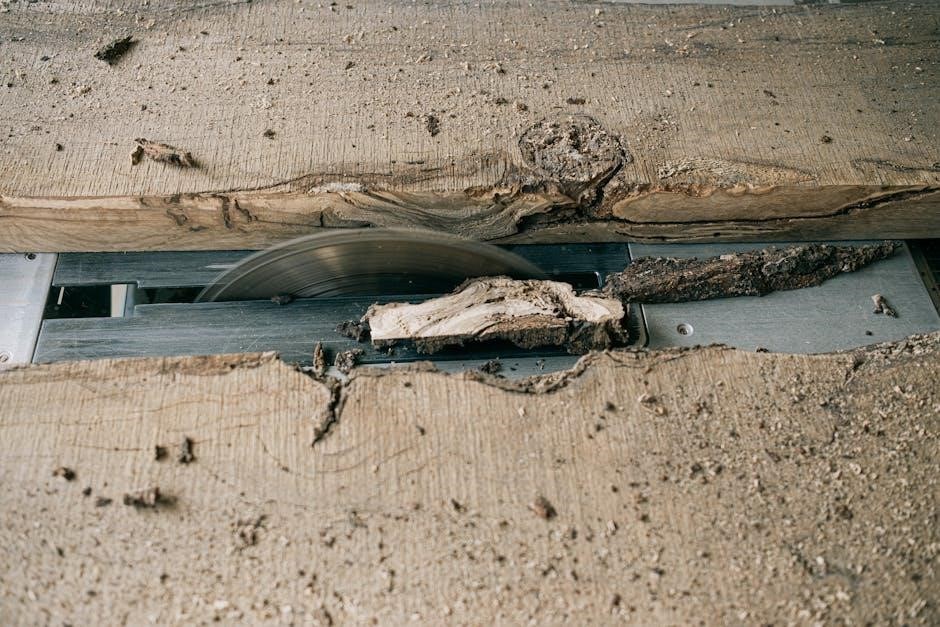
Blade Selection and Maintenance
The Bosch 4100 manual emphasizes using blades between .092″ and ;088″ thickness for optimal performance and safety, avoiding thin kerf or stabilizing collars.
Recommended Blade Types
The Bosch 4100 owner’s manual doesn’t explicitly list specific blade brands, but provides crucial guidance for compatibility and safety. It strongly advises against using extra-thin kerf blades – those less than .092 inches in width – as they can compromise the saw’s safety features.
Conversely, blades with excessively thick bodies (greater than .088 inches) are also discouraged. The manual prioritizes blades that work harmoniously with the riving knife and guard system. General purpose blades, dado blades (when appropriate), and plywood blades are suitable, provided they adhere to the specified thickness requirements for safe and accurate cutting.
Always consult the manual for detailed information regarding blade specifications.
Blade Changing Procedures
The Bosch 4100 owner’s manual details a specific blade changing process prioritizing safety. Always disconnect the power cord before beginning; Utilize the blade-change wrench provided with the saw to loosen and remove the arbor nut. Carefully remove the blade flange, then the old blade.
Install the new blade, ensuring it’s facing the correct direction. Reinstall the blade flange and tighten the arbor nut securely with the wrench. Double-check tightness. The manual emphasizes avoiding blade dampeners or stabilizers, as these can interfere with the riving knife’s function. Refer to page 30 of the manual for detailed illustrations.
Blade Thickness and Compatibility (.092″ ー .088″)
The Bosch 4100 table saw’s performance is directly linked to blade compatibility, as outlined in the owner’s manual. Crucially, avoid extra-thin kerf blades measuring less than .092 inches. Similarly, blades with a body plate exceeding .088 inches are also not recommended for optimal and safe operation.
This restriction ensures proper alignment with the riving knife, a vital safety component. Using incompatible blades can compromise cut quality and potentially lead to kickback. The manual stresses adherence to these specifications for consistent, accurate, and safe results.

Riving Knife and Guard System
The Bosch 4100’s manual emphasizes the riving knife’s importance for safety, preventing wood from pinching the blade. Proper alignment and maintenance are key.
Avoid using blade dampeners or stabilizers, as they can interfere with the riving knife’s function.
Importance of the Riving Knife
The Bosch 4100 table saw’s owner’s manual strongly highlights the critical role of the riving knife in ensuring operator safety. Its primary function is to prevent the wood being cut from pinching the saw blade, a dangerous situation that can lead to kickback.
Kickback occurs when the wood binds and is forcefully thrown back towards the operator. The riving knife, positioned directly behind the blade, keeps the kerf (the cut width) open, minimizing this risk. The manual stresses that the riving knife must be used during all ripping operations.
Without it, the likelihood of kickback significantly increases, potentially causing serious injury. Proper installation and adjustment, as detailed in the manual, are essential for optimal performance and safety.
Adjusting and Maintaining the Guard
The Bosch 4100 table saw’s owner’s manual provides detailed instructions for adjusting and maintaining the blade guard system. Proper guard positioning is crucial for safety, deflecting debris and providing a barrier against accidental contact with the blade.
The manual emphasizes ensuring the guard moves freely and doesn’t interfere with the workpiece. Regular checks are recommended to confirm secure mounting and proper function. It’s vital to adjust the guard to fully cover the blade at all times, except when performing specific operations where partial removal is necessary.
Maintaining a clean guard, free of sawdust and debris, ensures optimal visibility and functionality.
Avoiding Use of Blade Dampeners/Stabilizers
The Bosch 4100 table saw’s operating and safety instructions, detailed in the owner’s manual, explicitly advise against using blade dampeners or stabilizers. These devices, including stiffening collars placed on both sides of the blade, can severely compromise safety.
The manual clearly states that such additions can prevent proper alignment between the blade and the crucial riving knife. This misalignment increases the risk of kickback and potential injury.
Using extra thin kerf blades (less than .092″) or blades with a thick body (greater than .088″) is also discouraged for similar alignment reasons.

Troubleshooting Common Issues
The Bosch 4100 owner’s manual assists with resolving problems like a saw that won’t start or delivers poor cut quality, ensuring optimal performance.
Saw Not Starting
The Bosch 4100 owner’s manual provides troubleshooting steps if the saw fails to power on. First, verify the power cord is securely connected to a functioning outlet.
Check the circuit breaker or fuse box to ensure the circuit hasn’t tripped or blown. The manual emphasizes inspecting the on/off switch for proper operation; a faulty switch may require replacement.
Additionally, confirm the riving knife and guard are correctly positioned, as these safety features can sometimes interfere with the switch mechanism. Refer to page 30 for blade compatibility, as incorrect blades can strain the motor.
Poor Cut Quality
The Bosch 4100 owner’s manual addresses poor cut quality with several diagnostic steps. Ensure the blade is sharp and appropriate for the material being cut. Using incorrect blade types – too thin (<.092") or with a thick body (> .088″) – can cause issues.
Verify the blade is securely tightened and properly aligned. The riving knife must be correctly adjusted and functioning to prevent binding. Check for excessive vibration, which could indicate a damaged blade or motor.
Finally, confirm the fence and miter gauge are accurately set for the desired cut.
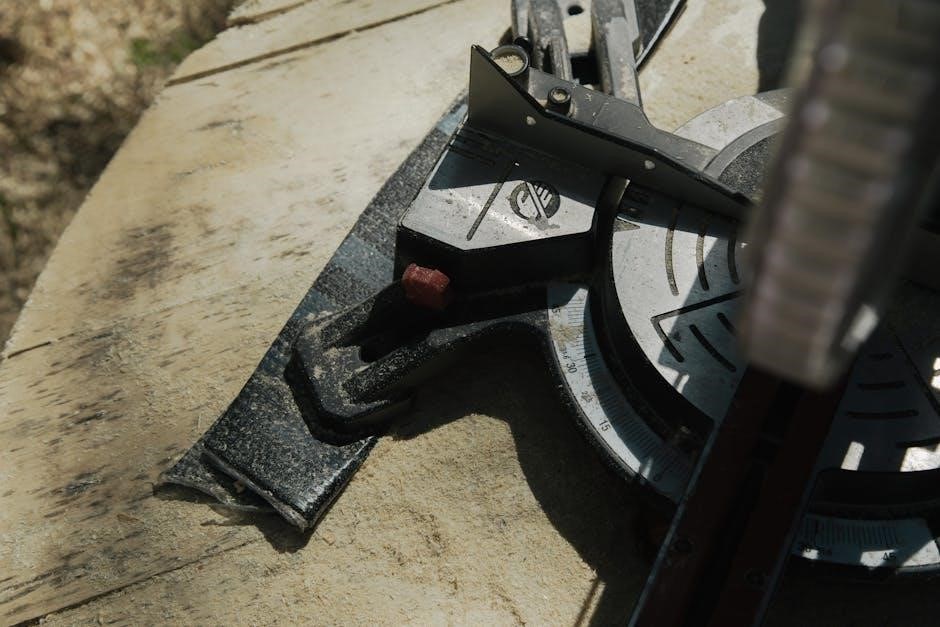
Maintenance and Care
The Bosch 4100 manual stresses regular cleaning and lubrication for optimal performance. Proper storage, detailed within the guide, protects the saw from damage over time.
Cleaning and Lubrication
The Bosch 4100 owner’s manual emphasizes the importance of keeping the table saw clean to ensure accurate cuts and prolong its lifespan. Regularly remove sawdust from the table surface, blade guard, and internal components using a vacuum or brush – never compressed air.
Lubrication is crucial for smooth operation. The manual details specific points requiring periodic lubrication, such as the elevation and tilt mechanisms, and the fence rails. Use a high-quality lubricant as recommended by Bosch to prevent corrosion and maintain optimal performance. Consistent cleaning and lubrication contribute significantly to the saw’s longevity and reliability.
Long-Term Storage
The Bosch 4100 owner’s manual provides guidance for safely storing the saw when not in use for extended periods. Before storage, thoroughly clean the entire saw, removing all sawdust and debris to prevent rust and corrosion. Apply a light coat of lubricant to all metal surfaces, particularly the table, rails, and moving parts.
Disconnect the power cord and store it separately. Cover the saw with a dust cover or tarp to protect it from dust and moisture. Store in a dry, climate-controlled environment to maintain optimal condition and ensure easy resumption of operation when needed.
Understanding the Owner’s Manual
The Bosch 4100 manual, available online via ManualsLib and the Internet Archive, contains vital safety instructions and operational details, with updates through 2021.

Locating Information within the Manual
The Bosch 4100 owner’s manual is structured to facilitate easy access to crucial information. Specific safety guidelines, including blade compatibility (avoiding blades less than .092” or greater than .088” thickness), are detailed on page 30.
Users can quickly find sections on setup, operation, maintenance, and troubleshooting. The manual, available digitally through resources like ManualsLib and the Internet Archive, features a comprehensive table of contents and potentially an index for pinpointing specific topics.
Understanding the manual’s organization is key to maximizing the saw’s performance and ensuring safe operation, as revisions occur to keep information current.
Manual Revision Dates and Updates
The Bosch 4100 table saw owner’s manual has undergone revisions since its initial release in 2012, with a noted update as recent as May 26, 2021, as documented on the Internet Archive.
These updates likely incorporate feedback from users, address potential safety concerns, and reflect any design changes to the saw itself. Checking the manual’s publication date is crucial to ensure you’re referencing the most current information, particularly regarding blade specifications and safety protocols.
Accessing the latest version from Bosch’s official website or reputable sources like ManualsLib guarantees you have the most accurate guidance.